
Executive Functioning & ADHD
Who we Help
What is Executive Functioning?
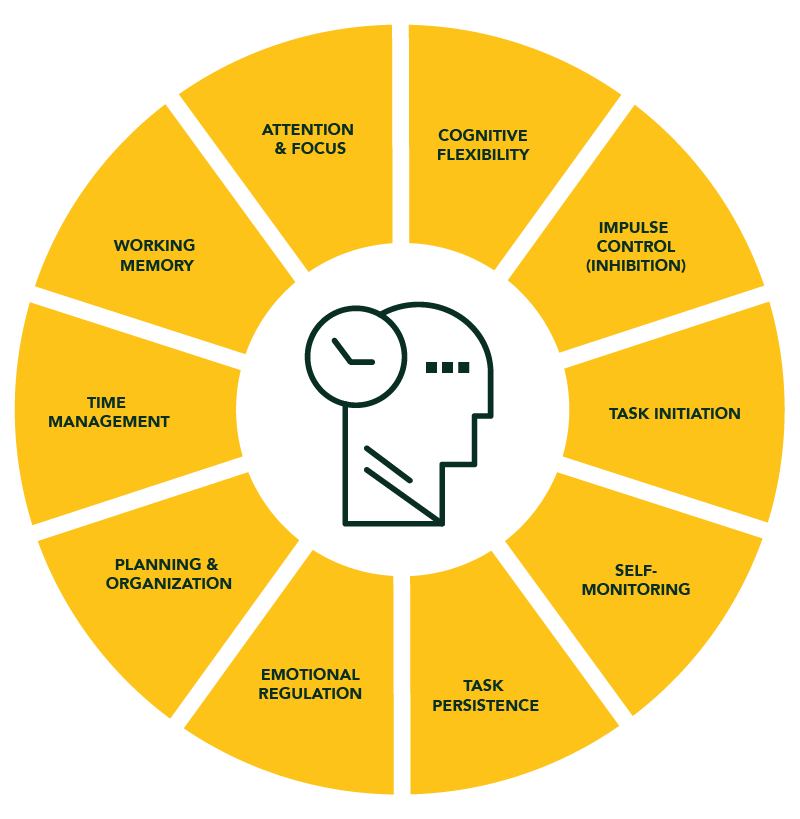
Executive Functioning (EF) encompasses a set of essential cognitive processes required for goal-directed behavior, including the regulation and control of thoughts, actions, and emotions. EF enables individuals to plan, organize, problem-solve, and adapt to changing circumstances through core components such as working memory, cognitive flexibility, and inhibitory control.
These executive functioning skills are integral to academic & professional success, as well as to emotional regulation and social competence. Research has demonstrated that strong EF skills are closely linked to enhanced mental and physical health, as well as overall quality of life, while deficits in EF can impede educational attainment, employment stability, and the development of meaningful interpersonal relationships.
10 Executive Functions
Isn’t Poor Executive Functioning
an ADHD Problem?
- ADHD
- Autism Spectrum Disorders
- Learning Disabilities
- Obsessive Compulsive Disorder (OCD)
- Anxiety Disorders
- Depressive Disorders
- Post-Traumatic Stress Disorder
- Eating Disorders
Attention-Deficit/ Hyperactivity Disorder (ADHD)

“ADHD is a disorder of converting intentions into actions.”
-Ari Tuckman, PsyD